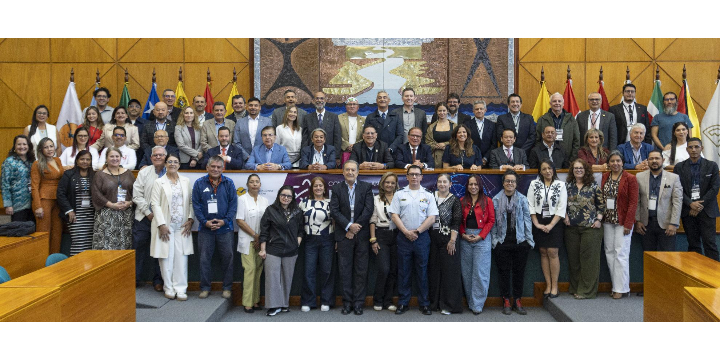
The TED 2024 focused on a timely and very interesting topic: "Digital Governance in the Age of AI: Evolving Policies, Regulations, and Practices."
During the different sessions, well-known experts in digital governance and the use of AI in Public Administration delivered keynote presentations highlighting cutting-edge themes related to the use of AI in governance, followed by discussions from participants representing both academic and professional networks: EGPA and NISPAcee.
After stimulating welcome messages from NISPAcee and EGPA Presidents, Prof Eka Akobia and Prof Jean-Michel Eymeri-Douzans, Prof William Webster provided TED 2024 participants with a very interesting presentation on "The Governance of AI and Big Data: Promises and Pitfalls for Public Policy and Services." He stimulated debate by questioning the audience: "What's new about AI and Big Data for Public Policy and Services?"
Prof Sabine Kuhlmann presented the DIGILOG research project on Digital Transformation at the Local Tier of Government in Europe: Dynamics and Effects from a Cross-Countries and Over-Time Comparative Perspective (DIGILOG). She mentioned that the project aims to analyze the state of implementation and the effects of digital transformation at the local level in Europe on a cross-countries and comparative basis.
During the second session, Ass Prof Dr Marius Bertolucci made a presentation underlining the challenges and risks of the use of AI.
His presentation entitled "AI and diminished man: the civil servants and citizens in the context of algorithmic government" stimulated a vivid discussion. Ass. Prof Bogdana Neamtu and Prof Jean-Michel Eymeri-Douzans made several comments and remarks on the impacts of AI on human resources management, people skills, and education. During the third session, Mila Gasco Hernandez made an interesting presentation on the determinants of successful adoption and implementation of AI in government and in public organizations, which was followed by remarks and comments of Ass Prof Eka Akobia and Prof Juraj Nemec.
Session 4 was dedicated to regulation and digital governance with a keynote speech from Professor Mihael Mudrić on "AI regulation in the EU: taming the tiger through dialogues and trilogues," discussed by Prof. Giovanni Fattore and Prof. Anamarija Musa.
The debate focused on the following question: Which regulation for AI? Risk-Based Protection of Values as in Europe, based on the control of information as in China (?) or Real-World Impact Emphasis as in the USA (?)
The wrap-up session with a tour-de-table discussion was monitored by Dean Prof Calin Hintea, who also provided the TED participants with his comments on AI and policymaking processes. He underlined the need for interdisciplinary research on the future of AI.
TED 2024 continued with presentations on Agile Government: innovation and flexibility in the digital public sector.
Professor Dr Joep Crompvoets delivered a keynote speech entitled: "AI in the public sector – hype or hit?"
He underlined the different roles of government in AI as follows: Governments are a vital player in the AI Society. He mentioned the four roles: Regulator, Enabler, Leader, and User.
Professor Dr Maja Klun and Professor William Webster monitored the debate, providing the audience with comments and remarks.
NISPAcee and EGPA Presidents offered their views on the dialectic between traditional PA theories and the latest developments of AI and Digital Governance.