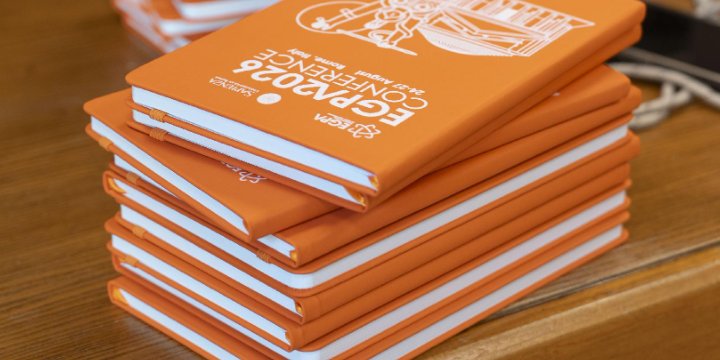
Trans-European Dialogue 2027

IIAS Engages in UN CEPA Meeting to Advance Global Public Administration Agenda

Diogo Pereira,

The International Institute of Administrative Sciences (IIAS) recently participated in the annual session of the United Nations Committee of Experts on Public Administration (CEPA) to address the global progress towards the Sustainable Development Goals (SDGs). Represented by Director General Sofiane Sahraoui and several prominent members and long-time associates, IIAS brought significant expertise and insights to the discussions.

Key figures from IIAS and IASIA, including Dr. Najet Zarrouk (President of IASIA), Juraj Nemec (Past VP for Publications), Lamya Moubayed (Past VP for MENA in IASIA), Geraldine Fraser-Moleketi (Chair of CEPA), Louis Meulemann (Vice-Chair of CEPA), Rolf Alter (CEPA rapporteur for the 24th session), and Alketa Peci (Past member of ICAPA SC), actively engaged in the UNCEPA agenda debates. Additionally, several IIAS/IASIA members attended as observers, alongside strategic partners such as AAPA, AAPAM, and MENAPAR.

On the sidelines of the CEPA session, IIAS participated in the UN Public Administration Network (UNPAN) meeting, showcasing its range of activities and announcing key future initiatives. This meeting provided an excellent opportunity to explore synergies with other global societies and enhance collaboration with UNPAN.

As part of its customary contribution, IIAS presented its input under the "Public Finances" theme. The full text of IIAS's contribution can be accessed below.

Resources

Public administration and management research has long drawn most of its ideas from Western, industrialised democracies. Yet Asia and the Global South have become major sites of administrative change, with large-scale reforms, fast-moving technology and some of the most inventive experiments in governance. Research from these regions has grown accordingly, but it is still often used to illustrate or apply theories made elsewhere, rather than to produce new ones.

This special issue of Public Management Review aims to change that. It invites authors to treat practice in Asia and the Global South as a starting point for theory: to test, question or extend established approaches, and to propose new concepts and explanations. It does not look for a single theory of these regions, which are far too diverse for that, but for context-sensitive contributions that also say something useful for policy and practice.
ASPA and EGPA call for papers | New Orleans, April 12-13, 2027 | Deadline: November 30, 2026

As democratic institutions face mounting pressure worldwide, public administrators are increasingly asked to spell out the role of their field in protecting and improving democratic systems. The American Society for Public Administration (ASPA) and the European Group for Public Administration (EGPA) are responding with the 2027 Transatlantic Dialogue (TAD), held alongside ASPA’s Annual Conference.

The theme is The Role of Public Policy and Administration in Shaping Democracy and Promoting the Resilience of Democratic Norms and Institutions.

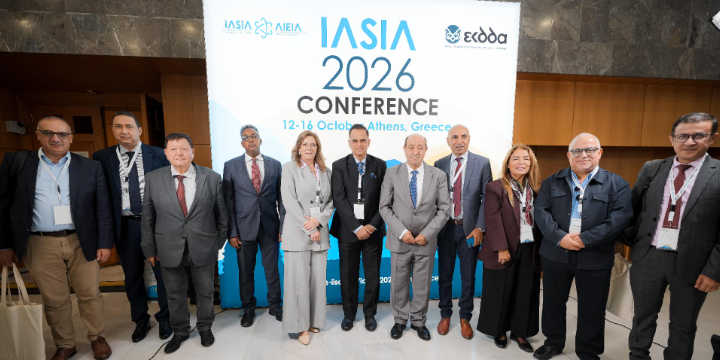
From 12 to 16 October 2026, the International Association of Schools and Institutes of Administration (IASIA) held its Annual Conference in Athens, hosted by EKDDA, the National Centre for Public Administration and Local Government. Under the theme “Rethinking Governance for a Changing World”, the conference gathered 400 delegates from 57 countries and marked the 65th anniversary of the association. Athens was a conference grounded by learning and history but also new projects and connexions.

Modify cookies