
IASIA is an entity of the International Institute of Administrative Sciences (IIAS), whose mission is to strengthen administrative capacity building around the world, to advance excellence in public administration education and training, and to conduct, discuss, and disseminate cutting-edge scholarly research and "smart practices" on governance and administration.
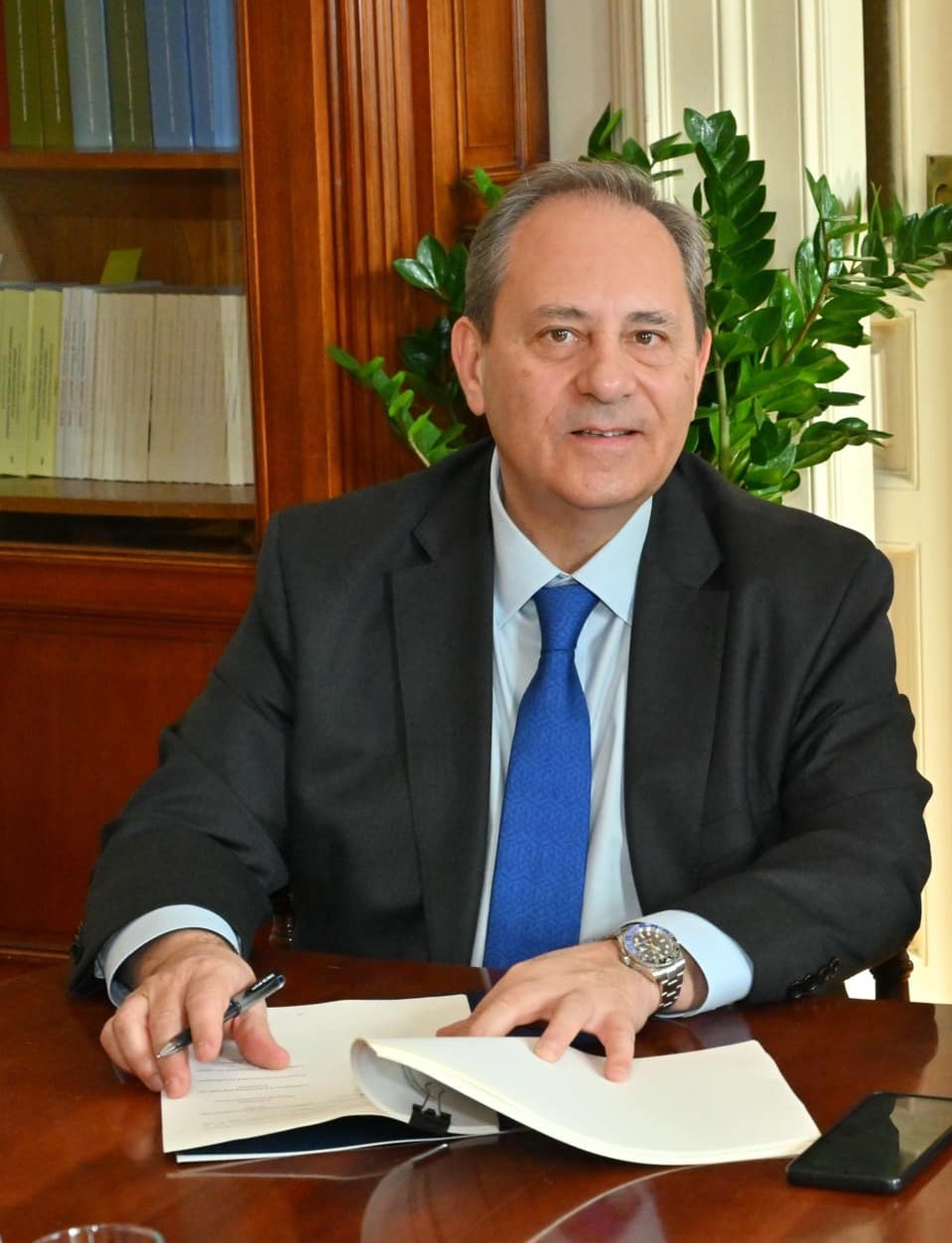
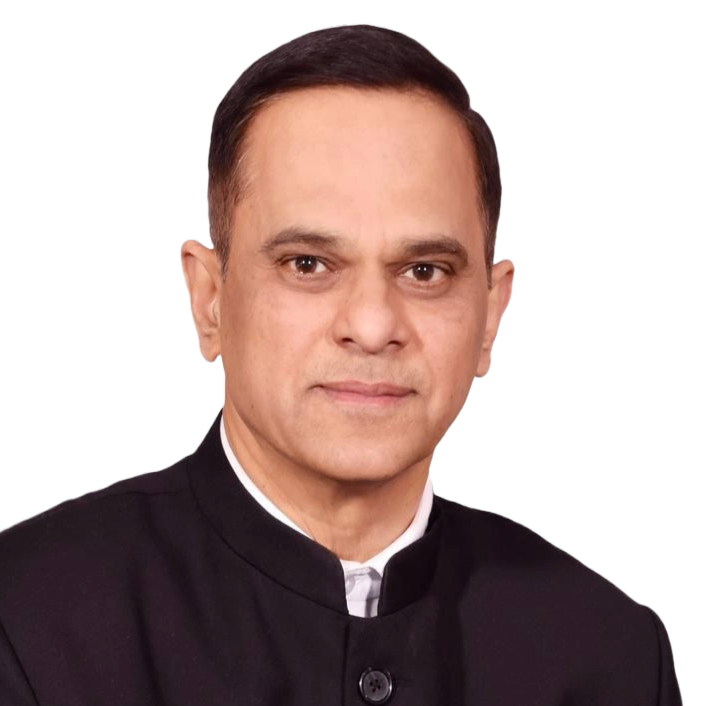
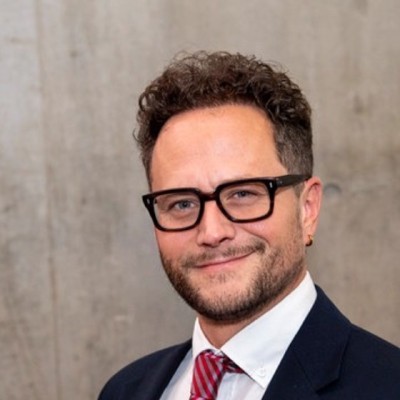
It is with sincere gratitude and a profound sense of responsibility that I accept the honour of serving as IASIA President. This opportunity constitutes a milestone in my public service journey, shaped first by years in government and later through academic engagement in the field of public administration. The role to which I have been dedicated has been built on hard work and steadfast commitment, and I remain indebted to the various colleagues, mentors, and institutions that supported and inspired my growth. I step into this presidency with energy and optimism, fully committed to the opportunities that lie ahead for IASIA and its global stakeholders.
IASIA boasts many strengths as it strives to advance excellence in public administration globally by accrediting high-quality programs, fostering interdisciplinary and comparative research, and strengthening international collaboration among scholars, practitioners, and policymakers. Through its scientific meetings and conferences, publications, and knowledge-sharing platforms, IASIA disseminates cutting-edge insights that shape the future of governance. The association remains committed to building capacity across regions, while nurturing emerging leaders and amplifying the voices of underrepresented individuals. Guided by cultural diversity, inclusivity, and mutual learning, IASIA provides a vibrant global community that promotes innovation, advances professional standards, and deepens democratic public governance worldwide.
While acknowledging the strategic challenges currently impacting the association, IASIA recognises the need to strengthen its financial sustainability, broaden inclusivity, and deepen member engagement to remain a truly global and relevant institution. Reliance on conference-based income, high participation costs, and uneven digital access, risk excluding scholars and practitioners, especially from less-resourced regions, and limit continuous knowledge sharing. The association should further guard against bureaucratic dominance while bridging the gap between global narratives and local realities, ensuring its work reflects diverse contexts. By addressing these challenges, we can build a more equitable, engaged, and future-focused membership base. In tandem with the IIAS vision to be a digitally agile, publication-rich, and resource-strong knowledge institution, as president, I envision a globally connected and influential community that sets the benchmark for excellence in public administration research, education, and practice. By building institutional continuity, nurturing emerging scholars, expanding open-access knowledge, and integrating transformative technologies such as artificial intelligence, I will strive to drive innovation that is ethical, inclusive, and future-focused.
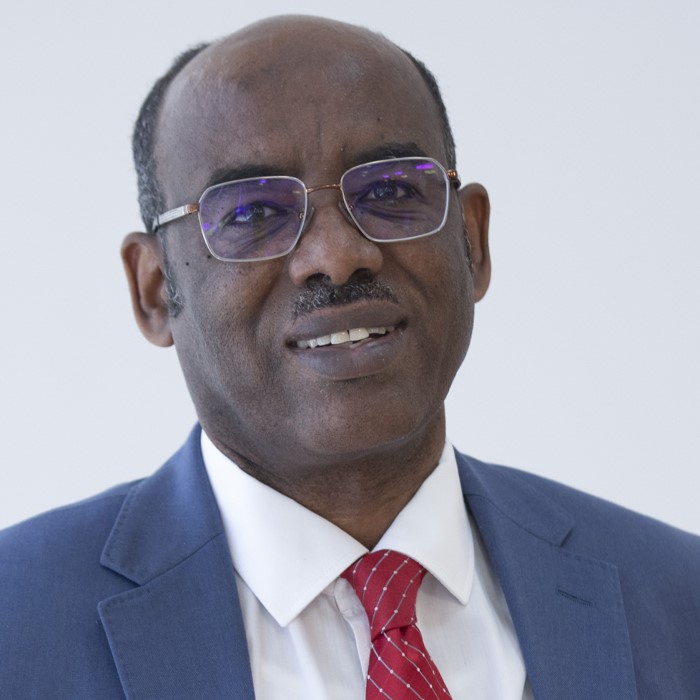
Building on my proud journey with IASIA and the contributions and personal fulfilment I experienced across various portfolios, projects and interventions, I am confident that my vision will advance the association's previous successes and elevate it to new horizons. In conclusion, we sincerely acknowledge the IASIA President of the previous term, Dr Najat Zarrouk from Morocco (2022–2025), the IIAS Past President, Dr Ra’ed Ben Shams, and the IIAS Director General, Dr Sofiane Sahraoui. Looking forward to the term ahead.
Professor of Public Administration and Management at the University of the Free State in South Africa
President of the International Association of Schools and Institutes of Administration (IASIA)
The IASIA Board of Management comprises the IASIA President, Immediate Past President, and representatives of its seven regions (Africa, Asia, Australasia, Europe, Latin America and the Caribbean, North America, and the Middle East. Their number can vary up to 25 members, determined by the members' quotas per region. Additionally, the IIAS President, IIAS Director General, and the ICAPA Accreditation Committee Chairperson are also members of the Board of Management as ex-offices. A General Meeting of the Association is convened with the Annual Conference.
IASIA has three categories of membership: corporate, associate, and individual.
Membership benefits include:
According to the article 2 of IASIA statutes:
How to Become a member: All interested institutions and individuals are welcome to join IASIA. Specific category application form should be requested via email to Mr. César Alfonzo, IASIA Executive Secretary, e-mail: c.alfonzo@iias-iisa.org
| Country | Organization / Instituion | Country | Organization / Instituion | Country | Organization / Instituion | ||
| Albania | Commissioner of the Oversight of the Civil Service of Albania | Colombia | Universidad Externado de Colombia | Poland | Lech Kaczynski - National School of Public Administration | ||
| Armenia | Public Administration Academy | Colombia | Universidad Del Valle | Portugal | ISCSP – Instituto Superior de Ciências Sociais e Políticas | ||
| Australia | University of Newcastle | Costa Rica | University of Costa Rica | Qatar | Doha Institute for Graduate Studies | ||
| Azerbaijan | The Academy of Public Administration under the President of the Republic of Azerbaijan | Croatia | University of Split | Qatar | Hamad Bin Khalifa Universtiy | ||
| Bahrain | Bahrain Institute of Public Administration (BIPA) | Czech Republic | Masaryk University | Romania | Școala Naţională de Studii Politice și Administrative (SNSPA) | ||
| Bahrain | Applied Science University | Djibouti | Secrétariat Exécutif Chargé de la Réforme de l'Administration du Ministère du Travail | Romania | Babes Bolyai University | ||
| Belgium | Service Publique Fédéral, Stratégie et Appui, WTC III | Ecuador | Instituto de Altos Estudios Nacionales | Romania | National Institute of Administration | ||
| Belgium | Universiteit Gent | Ecuador | Universidad Andina Simón Bolívar - Sede Ecuador | Russia | Moscow State University | ||
| Belgium | Ecole Royale Militaire | Egypt | The American University in Cairo | Saudi Arabia | Institute of Public Administration | ||
| Brazil | Getulio Vargas Foundation | Estonia | Tallinn University of Technology | Singapore | Chandler Institute of Governance | ||
| Brazil | Instituto Brasileiro de Ensino, Desenvolvimento e Pesquisa –IDP | Ethiopia | Addis Ababa University | Slovak Republic | Network of Institutes & Schools of Public Administration in Central & Eastern Europe (NISPAcee) | ||
| Brazil | Sociedade Brasileira de Administração Pública (SBAP) | Ethiopia | Ambo University | Somalia | Somali National University (SNU) | ||
| Brazil | Fundação João Pinheiro | Finland | University of Helsinki | South Africa | University of Johannesburg | ||
| Brazil | Instituto Brasileiro de Administração Pública (IBAP) | France | Université de Bretagne Occidentale | South Africa | Stellenbosch University | ||
| Canada | University of Guelph | Gabon | Ecole Administrative de Préparation aux Carrières Administratives du Gagon (EPCA) | South Africa | University of Venda | ||
| Chile | Universidad de Chile | Germany | Bundesakademie für Öffentliche Verwaltung | South Africa | National School of Government | ||
| Chile | Escuela de Capacitación - Tesorería General de la República | Germany | Hochschule fuer Wirtschaft und Recht Berlin | South Africa | Nelson Mandela Metropolitan University | ||
| China | China Society of Administrative Reform (CSOAR) | Germany | Research Institute for Public Administration (FOEV) | South Africa | North-West University | ||
| China | Hunan Agriculture University | Germany | Verwaltungsakademie Berlin (VAk) - Berlin‘s college of public administration | South Africa | University of Fort Hare | ||
| China | Chinese National Academy of Governance (CNAG) | Greece | Ethniko Kentro Dimosias Dioikisis & Aftodioikisis (EKDDA) | South Africa | University of Kwa Zulu-Natal | ||
| China | Shanghai Administration Institute | Hungary | University of Public Service | South Africa | University of Pretoria | ||
| China | Sichuan Administration Institute (SAI) | India | Centre for Environmental Management & Participatory Development (CEMPD) | South Africa | University of South Africa | ||
| China | Jiangxi Administration Institute | Italy | Scuola Nazionale dell'Amministrazione | South Africa | University of the Free State | ||
| China | Guizhou Academy of Governance | Ivory Coast | Centre Africain de Management et de Perfectionnement des Cadres (CAMPC) | Spain | Instituto Nacional de Administracion Publica | ||
| China | Qingdao Academy of Governance | Kenya | Kenya School of Government (KSG) | Switzerland | IDHEAP-Swiss Graduate School of Public Administration | ||
| China | Beijing Administration Institute | Korea | Ministry of Interior and Safety (MOIS) | Switzerland | University of Bern | ||
| China | Jiangsu Administration Institute | Korea | NHRDI | Taiwan, China | TASPAA | ||
| China | Nanjing Academy of Administration | Kosovo Republic | Kosovo lnstitute for Public Administration (KIPA) | Tanzania | Eastern et Southern African Management Institute (ESAMI) | ||
| China | Shanxi Administration Institute | Lebanon | Institut Basil Fuleihan pour l'économie et les finances | Tunisia | Ecole Nationale d'Administration | ||
| China | Qinghai Academy of Governance | Lithuania | Kaunas University of Technology, Faculty of Social Sciences, Arts and Humanities | Uganda | Uganda Management Institute | ||
| China | Anhui Academy of Governance | Lithuania | Training centre “Dainava” for civil servants and local administration | Ukraine | International Institute of Business | ||
| China | Jilin Administrative College | Mexico | Instituto Nacional de Administracion Publica (INAP) | USA | American Society for Public Administration (ASPA) | ||
| China | Xi'an Administration Institute | Mexico | Universidad Autónoma de Nuevo León (UANL) | USA | Florida International University | ||
| China | Shandong Academy of Governance | Montenegro | Regional School of Public Administration (ResPA) | USA | George Mason University | ||
| China | Guangdong Institute of Public Administration (GDIPA) | Morocco | UCLG Africa / ALGA - Cites et Gouvernements Locaux Unis d'Afrique (CGLUA) | USA | Network of Schools of Public Policy, Affairs and Administration (NASPAA) | ||
| China | Guangzhou Administration Institute | Morocco | Centre Africain de Formation et de Recherche Administrative pour le Dévelopement (CAFRAD) | USA | Rutgers University | ||
| China | Fujian Institute of Public Administration | Morocco | Université Mohamed V Rabat | USA | Virginia Commonwealth University | ||
| China | Zhejiang Institute of Administration | Morocco | Ministre de la Transition Numérique et de la Réforme de l'Administration | USA | University of La Verne | ||
| China | Gansu Administration Institute | Morocco | Université Abdelmalek Essaâdi | USA | University of San Francisco | ||
| China | China Tianjin Administrative Institute | Myanmar | Civil Service Academy (Upper Myanmar) | USA | Fairleigh Dickinson University (FDU) | ||
| China | Academy of Governance | Myanmar | Civil Service Academy (Lower Myanmar) | Vietnam | National Academy of Public Administration | ||
| China | Liaoning Academy of Governance | Netherlands | Radboud Universiteit Nijmegen | ||||
| China | Chongqing Administration Institute | Palestine | General Personnel Council | ||||
| China | Hunan Administration Institute | Philipines | Development Academy of the Philippines |
The IASIA Annual Conference is the association's flagship event that brings together scholars, practitioners, and students in the field of public governance from around the world. Held in different countries and regions each year, the conference is structured around various activities, including plenary sessions, seminars, sessions of IASIA Working Groups, statutory and institutional meetings, and a social program designed to facilitate networking among participants.
The IASIA Working Groups are specialized teams within the association that focus on the study and development of specific topics in public administration and management. These groups serve as platforms for members to exchange information, share experiences, and collaborate on research, policy development, and best practices within their areas of interest. Working Groups are essential for driving IASIA's mission by fostering in-depth analysis, discussion, and the dissemination of knowledge among its members.
The International Commission on Accreditation of Public Administration education and training programs (ICAPA) is the quality assurance body of the International Association of Schools and Institutes of Administration (IASIA), an internal association of IIAS. Its accreditation criteria are based on Standards of Excellence elaborated by a joint task force including representatives of IASIA and the United Nations Department of Economic and Social Affairs (UNDESA). This involved input from over 1,500 public administration scholars and practitioners from throughout the world. As such, while there are other national and regional accrediting authorities, ICAPA is the only truly international accrediting body. These are designed to support capacity building for development efforts. ICAPA governance Includes an Accreditation Committee (AC), a Steering Committee (SC) and a Secretariat.

The IASIA OP Dwivedi Award, established by the International Association of Schools and Institutes of Administration (IASIA) in 2008, honors outstanding contributions to global public administration. This award is part of the lasting legacy of Onkar Prasad Dwivedi (1937–2013), a respected scholar and public servant.
Onkar Prasad Dwivedi, originally from Uttar Pradesh, India, moved to Canada in 1963 and earned a doctorate in political science from Queen's University. He joined the University of Guelph in 1967, where he became a University Professor Emeritus. A prolific scholar, he published over 30 books and 100 articles on environmental policy and public sector ethics. He served as president of the Canadian Political Science Association, Vice President of IASIA, and held public service roles, including on Ontario's Environmental Assessment Board. Honored with the Order of Canada and as a Fellow of the Royal Society of Canada, he also founded a free eye hospital in India. His legacy is honored through the OP Dwivedi Award in public administration.
The Donald C. Stone Award, established by the International Association of Schools and Institutes of Administration (IASIA) in 2012, honors exemplary contributions to the advancement and well-being of IASIA. The award is named after Donald C. Stone (1903–1995), a prominent U.S. statesman and international policy advisor known for applying scientific management principles to government institutions.
Donald C. Stone born on June 17, 1903, in Cleveland, Ohio. He significantly influenced U.S. and global policy during the Depression and WWII. He co-founded the Public Administration Service, helped create the American Public Works Administration, and contributed to drafting the UN and UNESCO charters.
Stone played a key role in implementing the Marshall Plan and worked with various U.S. agencies. As IASIA's founding president, his contributions are honored through an award bearing his name.